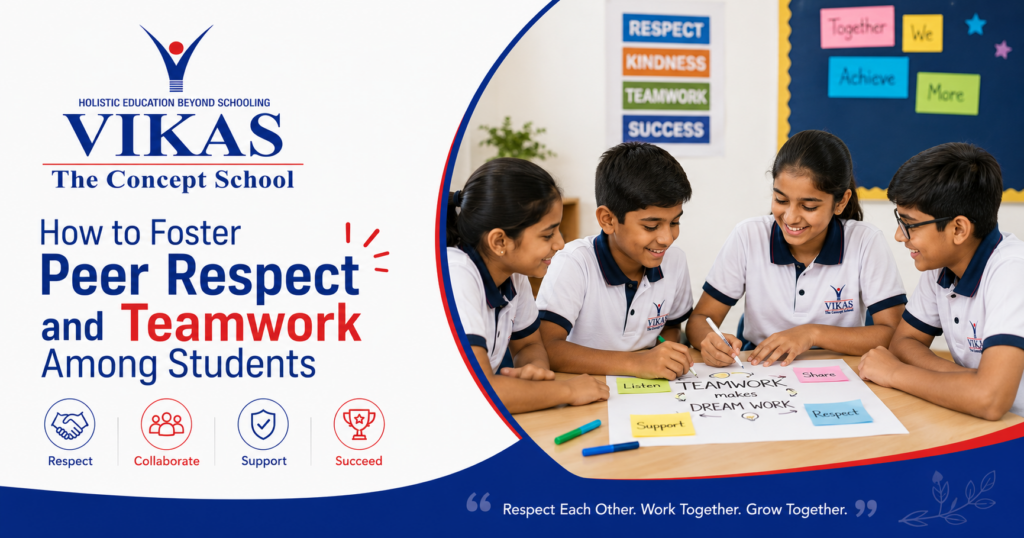
Some of the most important lessons a child learns at school are never written in a textbook. How to work with others, value different opinions, resolve a disagreement, and treat classmates with kindness — these are the skills that shape not just a student's school years, but their entire life. Building peer respect among students and strong teamwork is one of the most valuable things a school can do.
At Vikas the Concept School, Hyderabad, we believe that a classroom where students respect and support one another is the foundation of all good learning. Here are practical, proven ways to foster that culture.
Why Peer Respect and Teamwork Matter
When students respect one another, the whole learning environment changes. Children feel safe to ask questions, share ideas, and make mistakes without fear of ridicule. Bullying decreases, confidence rises, and classrooms become happier, more productive places.
Teamwork skills for students are just as crucial. In almost every future workplace and community, success depends on the ability to collaborate — to listen, contribute, compromise, and achieve something together that no one could achieve alone. Teaching these abilities early gives children a lasting advantage.
1.Model Respect Before You Teach It
Children learn far more from what they see than from what they are told. The most powerful way to foster peer respect among students is for adults — teachers and parents alike — to model it consistently.
When students see educators listening carefully, speaking kindly, valuing every voice, and treating mistakes with patience, they absorb those behaviours as the norm. Respect is taught less through lectures and more through everyday example.
2.Make Expectations Clear and Shared
Respect flourishes when everyone understands what it looks like in practice. Rather than imposing rules from above, involve students in creating shared agreements for how the class will treat one another: listening without interrupting, disagreeing politely, including everyone, and celebrating each other's successes.
When children help shape these expectations, they feel ownership over them — and are far more likely to uphold them.
3.Use Collaborative Learning Intentionally
Collaborative learning — where students work together towards a common goal — is one of the most effective ways to build both teamwork and respect. Group projects, peer discussions, problem-solving tasks, and cooperative activities give children real practice in working as a team.
The key is to design these experiences thoughtfully. Assign clear roles so every member contributes. Mix groups regularly so students learn to work with different personalities, not just their close friends. And focus on shared success, so children come to see their classmates as collaborators rather than competitors.
4.Teach Teamwork Skills Explicitly
We often expect children to "just know" how to work in a team, but teamwork skills for students need to be taught like any other skill. Help children learn how to listen actively, share responsibility fairly, give and receive feedback kindly, and contribute their strengths to a group.
Equally important is teaching them how to handle disagreement. Show students how to express a different view respectfully, find common ground, and resolve conflicts without resentment. These skills transform a group of individuals into a genuine team.
5.Encourage Student Relationship Building
Strong teamwork grows out of strong relationships. Deliberate student relationship building
— helping children get to know and appreciate one another — creates the trust that good collaboration depends on.
Simple practices make a real difference: activities that help students discover shared interests, opportunities to work with a wide range of classmates, mentoring between older and younger students, and a classroom culture where every child feels they belong. When students genuinely know and value each other, respect and cooperation follow naturally.
6.Celebrate Collaboration, Not Just Competition
Healthy competition has its place, but a culture obsessed with ranking individuals can quietly undermine respect and teamwork. Balance it by recognising and celebrating cooperation, helpfulness, and group achievement.
When children see that lifting others up is valued just as highly as personal success, they learn that their classmates' growth is something to support, not envy.
7.Address Conflict as a Learning Opportunity
Disagreements among children are inevitable — and that is not a bad thing. Each conflict is a chance to teach empathy, communication, and problem-solving. Rather than simply punishing disputes, guide students to understand each other's feelings, take responsibility, and repair the relationship.
Handled well, conflict becomes one of the most powerful teachers of respect a child will ever encounter.
Our Commitment at Vikas
At Vikas the Concept School, Hyderabad, we work every day to build a community where students respect one another, collaborate generously, and grow together. We see peer respect and teamwork not as add-ons to education, but as essential parts of nurturing capable, compassionate, and confident young people.
Because the children who learn to respect and work alongside others today will become the leaders, colleagues, and citizens who bring people together tomorrow.